![Three OLMA caviar tins (Kaluga Royal, Osetra Gold, Osetra Malossol) displayed on a festive wooden table with candles in the background, conveying a luxury dining scene.”] } |? Wait format requires array of strings. Let's format properly.](https://olmafood.com/wp-content/uploads/2026/11/879856338_18350865697283601_6107504403131693403_n.jpg.webp)






What to Serve with Caviar: Blinis, Toppings, and Easy Garnish Ideas


Caviar, at its best, is about restraint. It is not piled high on a random cracker or lost under a tangle of aggressive flavors. It is given space—on a warm blini, a perfectly crisp potato chip, a sliver of foie gras—so its salinity, texture, and quiet richness can come through. When you choose the right accompaniments, the entire experience feels less like a garnish and more like an event.
Setting the Stage
The first decisions are practical. Caviar should be very cold, served from a tin nested in crushed ice, the beads firm and glistening rather than softening in the warmth of the room. A non‑metallic spoon—mother‑of‑pearl, bone, or a simple plastic tasting spoon—keeps the flavor clean. Portions remain small. This is not a spread to shovel; it is something to savor in measured bites, with the accompaniments doing just enough work around the edges.
From there, the question becomes: what, exactly, do you put under and around it?
The Comfort of a Blini
The traditional answer is the blini, and there is good reason for its persistence. A proper blini is tender and understated, a miniature pancake that offers just enough body to carry the roe without competing for attention. Slightly warmed in a dry pan or low oven, it feels luxurious in the hand and comforting on the palate—a soft backdrop for the sharp, bright pop of the caviar.
Made with a touch of butter or cultured dairy, blinis bring a faint tang and richness that flatter most styles of caviar, from briny, assertive beads to creamier, nutty varieties. Their modesty is their strength. They are a stage, not a co‑star.
The Pleasures of Crunch
Not every caviar evening needs to feel classical. In recent years, a more playful pairing has stepped firmly into the spotlight: the potato chip.
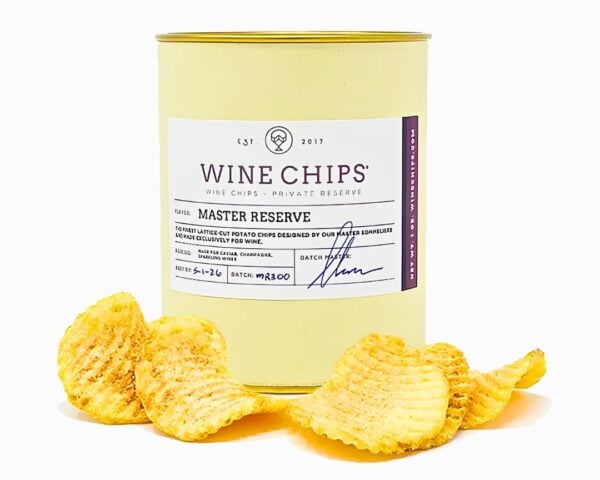
A good potato chip—thick‑cut, kettle‑cooked, lightly salted, and free of overpowering seasonings—does for caviar what a well‑made crust does for a tart. It provides structure and crunch, a salty, shattering contrast to the softness of the roe. A smear of crème fraîche on the chip, followed by a small spoonful of caviar, creates a bite that is both informal and extravagant. It is the sort of pairing that works as well at a late‑night gathering as it does at a carefully planned celebration.
Artisanal crackers play a similar role, though in a more refined register. Choose those with subtle flavor and a firm yet delicate snap, the kind meant to stand up to soft cheeses without stealing the spotlight. They make an ideal base for composed bites: a thin layer of French butter or foie gras, a small mound of caviar, perhaps a single chive or microgreen on top. Crackers like the ones offered in curated selections—think Artisanal Crackers designed specifically for gourmet toppings—quietly support the main ingredients while adding just enough character of their own.
Richness on Richness: Crème Fraîche, Butter, Foie Gras
If there is a single indispensable partner to caviar, it is crème fraîche. Thick, tangy, and faintly nutty, it serves as a cushion between the base and the roe, tempering the salt, smoothing the edges, and bringing everything together. A small dollop is all it takes; too much and the topping will slip into dominance. But in the right proportion—on a blini, an artisanal cracker, or even a potato chip—it makes each bite feel complete.
French butter plays a related, slightly more decadent role. Cultured and high in butterfat, it carries a lactic complexity that mirrors some of the deeper notes in the caviar. Spread thinly on warm toast points, blinis, or crackers, it gives the roe a glossy bed, amplifying its richness without masking its nuance. A simple slice of bread or cracker, a smear of very good butter, and a spoonful of caviar can be as satisfying as any elaborate canapé.
Foie gras takes that indulgence further. Here, the combination becomes almost baroque: a delicate cracker or brioche point, a translucent slice of foie gras terrine or torchon, a modest spoon of caviar resting on top. The result is deeply luxurious, silky on silky, salt and fat intertwining in a way that almost demands a glass of Champagne. Portions should remain small—the experience is intense, and a little goes a long way—but as a centerpiece bite on a platter, it is hard to match.
The Quiet Supporting Cast
Around these central players, a familiar cast of accents waits in small dishes: finely minced red onion or shallot, hard‑boiled egg, a scattering of herbs. When handled gently, each adds texture and dimension without pulling focus.
The onion should be cut as finely as patience allows, then, if desired, briefly rinsed and dried to soften its raw edge. The egg is typically divided into two components—whites chopped, yolks crumbled—so guests can build a bit of richness or texture as they please. Herbs such as chives or dill are best treated as a finishing touch, sprinkled lightly over the top of a blini or cracker just before serving.
None of these should be mandatory. They are possibilities, not requirements, and their role is to frame the caviar, not compete with it.
Garnish as Theater
Presentation matters. Caviar has always carried a sense of occasion, and the best garnishes heighten that feeling without becoming distracting. Lemon wedges, for instance, belong on the platter rather than directly over the caviar; a cautious squeeze over a blini with crème fraîche or foie gras can refresh the palate, but the roe itself benefits from a lighter hand. Lemon zest, grated finely, offers aroma without acidity and can be used in pinches.
Microgreens—tiny pea shoots, micro chives, wisps of dill—bring freshness and a particular visual precision to the plate. A single sprig on a finished bite, or a cluster scattered around the serving dish, makes the spread look composed rather than crowded.
Then there is gold: the smallest fragment of 24‑karat edible leaf resting on a spoonful of roe. Gold Foil Flakes contribute no flavor at all, but that is not the point. They turn a simple blini or cracker into an object of spectacle, the sort of bite that guests hesitate over for a moment before finally surrendering and eating. Used sparingly—one or two gold‑topped pieces on a platter—they signal celebration without tipping into excess.
Bringing It All Together
A well‑planned caviar service does not require dozens of elements; it benefits more from clarity than from abundance. One might set out a chilled tin of roe, a stack of warm blinis, a bowl of thick crème fraîche, a plate of kettle‑cooked potato chips, a small dish of French butter, and a restrained selection of garnishes: minced shallot, chopped egg, a handful of chives, a few microgreens. A tray of Artisanal Crackers and a few carefully gilded bites with gold flakes complete the scene.
Champagne or another dry sparkling wine feels natural here, its acidity and bubbles cutting through cream and fat, resetting the palate for the next small, deliberate taste. Vodka, served very cold and very clean, does the same in a more austere register.
In the end, what to serve with caviar is less about rules than about intention. The goal is to choose a few excellent things—soft and crisp, rich and fresh, familiar and extravagant—and let them frame the roe without overshadowing it. When you do, even the simplest evening at home feels quietly, unmistakably grand.