


![Three OLMA caviar tins (Kaluga Royal, Osetra Gold, Osetra Malossol) displayed on a festive wooden table with candles in the background, conveying a luxury dining scene.”] } |? Wait format requires array of strings. Let's format properly.](https://olmafood.com/wp-content/uploads/2026/11/879856338_18350865697283601_6107504403131693403_n.jpg.webp)



Malossol Caviar: What It Means and Why It Matters?

Some of the most important words on a caviar tin are also the easiest to overlook. On every OLMA Caviar label, usually in smaller type than the species or size, you will find a single term: malossol. It appears in restaurant refrigerators, in online product listings, and on the tins we pack every day, yet it is rarely explained clearly. For something as nuanced as caviar, that matters more than it should.
Understanding this term goes a long way toward understanding why one tin tastes vivid and layered while another tastes mostly of salt. For OLMA, it is not a marketing flourish. It is a quiet promise about how the roe was treated on its way from sturgeon to your table.
What “Malossol” Means?
The word malossol comes from Russian and translates literally as “little salt” or “lightly salted.” In caviar production, it refers to a traditional method of curing roe with a low salt level, typically in the low single digits by weight. The goal is simple: use just enough salt to season, gently firm the eggs, and keep them safe, without drowning out their natural character.
Before reliable refrigeration, many producers relied on much higher salt levels to preserve caviar for transport and storage. Those heavily salted styles are what many people think of as “regular caviar”: intense, long‑lasting, and often dominated by salinity. Malossol developed as a higher‑quality alternative—less salt, better fish, more flavor.
Malossol vs “Regular” Caviar
When people search “malossol vs regular caviar,” they are usually trying to understand why some tins are labeled and priced differently. The distinction is mostly sensory.
-
Flavor
-
- Malossol caviar lets you actually taste the roe. The salt supports the flavor instead of overwhelming it, so you can tell a buttery Kaluga from a nutty Osetra or a clean, briny Siberian.
- Heavily salted caviar often tastes primarily of salt, with a broad “fishy” note underneath and less nuance between varieties.
-
Texture
-
- With malossol, eggs keep a delicate, precise “pop” and a creamy interior. Too much salt pulls moisture out of the eggs and can make them tougher or slightly rubbery over time.
-
Shelf life
-
- Malossol caviar is fresher and more perishable. It relies on proper cold storage and careful handling instead of a heavy salt cure.
- Heavily salted caviar can sit longer and travel rougher, but you trade away subtlety and elegance.
In practice, malossol is a quality signal. It tells you that the producer is depending on freshness and refrigeration, not an excess of salt, to keep the caviar at its best.
Why Low Salt Matters for OLMA’s Caviar?
Caviar is one of the few foods where salt is both ingredient and lens: it can sharpen details or wash them out. At OLMA, we use a little salt to cure because it keeps the focus where it belongs—on the roe itself.
With OLMA’s malossol Kaluga, you notice a rounded, buttery richness and large, golden pearls that feel lush rather than aggressively salty. With malossol Osetra, you taste the classic nutty, slightly mineral profile that has made Osetra a benchmark caviar for generations. With malossol Siberian, the appeal is a clean, sea‑forward brightness that works as well on a blini as it does over a delicate dish.
Because the salt level is restrained, those differences are clear enough that even first‑time tasters can pick them out. That is especially important if you enjoy:
-
- Side‑by‑side tastings of different caviar types
- Pairing caviar with Champagne, vodka, or chilled white wine
- Using caviar in simple dishes where every detail shows
Heavier salting blurs those distinctions; using less salt preserves them.
How to Spot Malossol on an OLMA Tin?
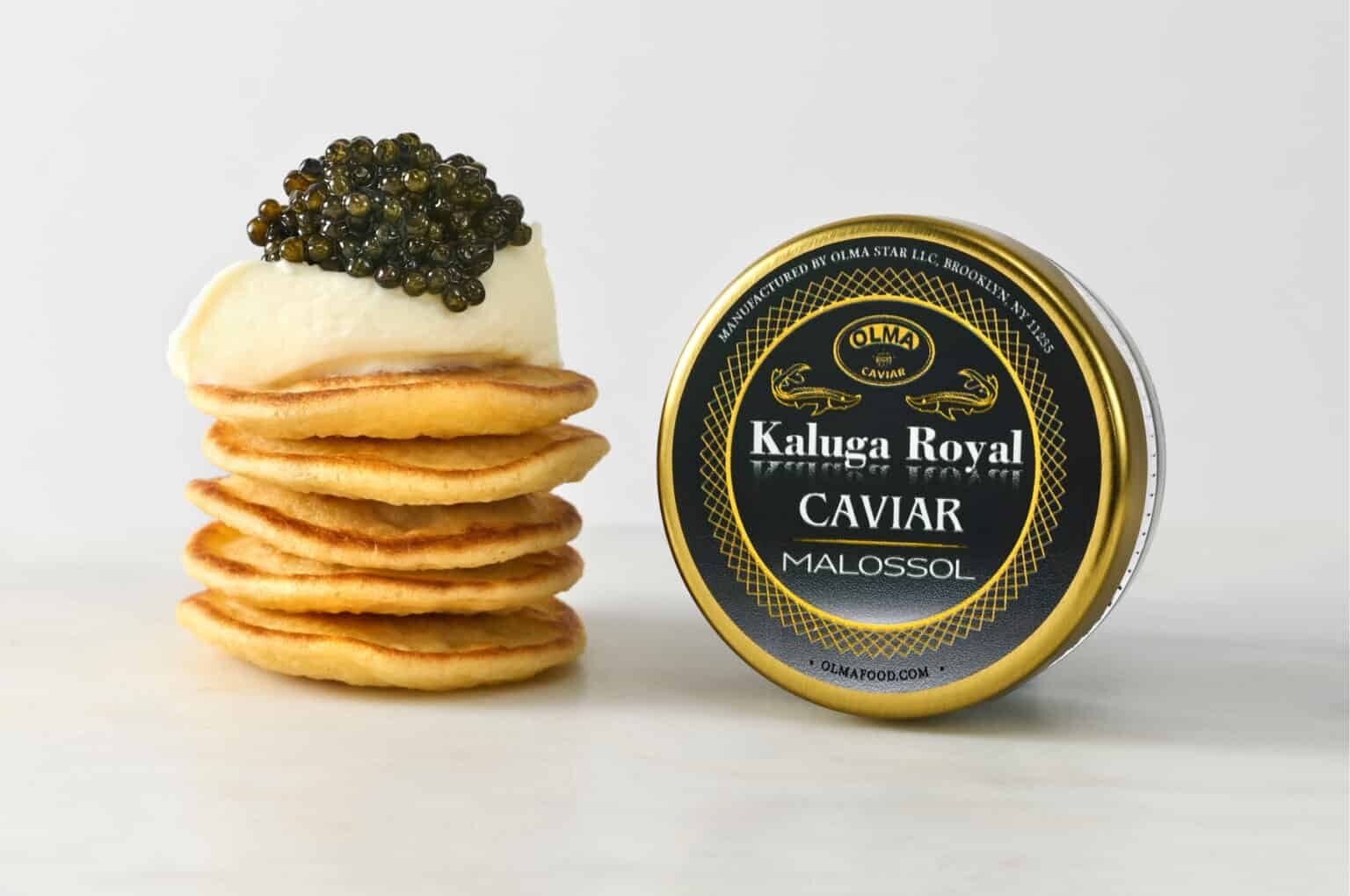
On OLMA packaging, malossol is easy to find once you know to look for it:
-
- The word “malossol” appears on the front label near the caviar name and species.
- The ingredients list is deliberately short: sturgeon roe (or the named species) and salt.
- We rely on the cold chain and low salt—not added flavors or heavy preservatives—to protect the caviar’s integrity.
If you are browsing OLMA’s website, you will see “malossol” referenced in product descriptions for our sturgeon caviars as well. That consistency is intentional: it tells you the same salting philosophy applies whether you are buying Kaluga, Osetra, Siberian, or a sampler.
Why OLMA Chooses Low Salt?
Choosing malossol means choosing a more demanding way of working. It assumes:
-
- High‑quality roe to begin with;
- Gentle handling from harvest onward;
- Refrigerated storage and fast, reliable shipping to you;
We use malossol because we want our caviar to taste like itself. Kaluga should taste like Kaluga, Osetra like Osetra, Siberian like Siberian—not like three versions of “mostly salty.” Heavier salting would make logistics easier, but it would also flatten those differences. For OLMA, that is not a trade we are willing to make.
So when you see “malossol” on an OLMA Caviar tin, read it as a small but important assurance: the salt is there to season and protect, not to dominate. The point is not just to serve caviar in the abstract, but to give you the clearest possible expression of the roe inside that tin
Excellent explanation, very easy to understand and great reason to buy the malossol tin cans in the future .
Thank you